

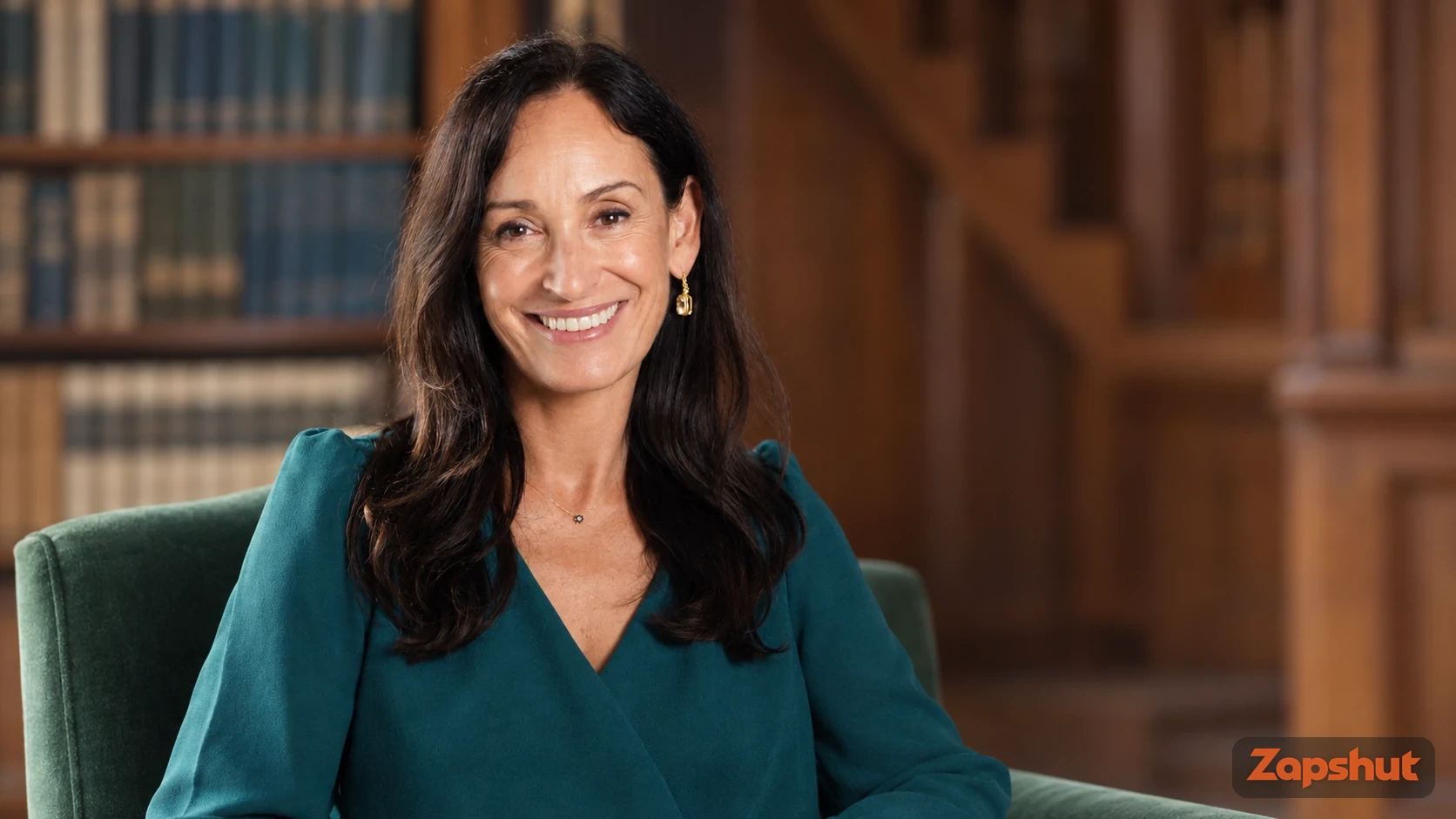
Alissa Mahler is the former academic surname of Alissa Rose Knowles, a psychological-science researcher and university educator whose work has focused on adolescent development, juvenile justice, future expectations and risk behavior. The connection between the two names is explicit: the curriculum vitae included with her 2019 UC Irvine doctoral dissertation states that her last name changed from Mahler to Knowles in 2018.
Knowles earned a bachelor’s degree in psychology and history from the University of Maryland in 2012, a master’s degree in Social Ecology from the University of California, Irvine in 2016, and a PhD in Psychological Science from UC Irvine in 2019. Her doctoral concentrations were Developmental Psychology, Quantitative Methods, and Psychology and Law. Her academic record also includes peer-reviewed research published under both the Mahler and Knowles surnames.
She is married to political commentator Michael Knowles. Her dissertation acknowledgments refer to “my husband, Michael,” and Michael Knowles publicly referred to “my wife Alissa” in a February 2024 appearance. The exact date of their wedding is widely repeated online but is not established strongly enough in the available primary record to state as fact.
| Profile | Verified information |
|---|---|
| Full academic name | Alissa Rose Knowles |
| Earlier academic name | Alissa Mahler |
| Name change | Mahler to Knowles in 2018 |
| Bachelor’s degree | Psychology and History, University of Maryland, 2012 |
| Master’s degree | Social Ecology, UC Irvine, 2016 |
| Doctorate | Psychological Science, UC Irvine, 2019 |
| Research focus | Adolescent development, juvenile justice, future expectations and delinquency |
| Latest verified academic role | Assistant Teaching Professor, Arizona State University, 2024–25 |
| Spouse | Michael Knowles |
Education and Research Training
Mahler’s academic path began at the University of Maryland, College Park, where she completed a double major in psychology and history, graduating cum laude in 2012. Her later UC Irvine CV also records undergraduate research positions at Maryland, including work in the Mind Perception and Morality Lab and the Maryland ADHD Program.

From 2012 to 2014, she held a post-baccalaureate research fellowship through the Eunice Kennedy Shriver National Institute of Child Health and Human Development. She then entered graduate study at UC Irvine, where her work increasingly focused on developmental psychology and young people involved with the justice system.
Her master’s degree was awarded in 2016. Her UC Irvine master’s thesis, Expecting the unexpected? Expectations for future success among adolescent first-time offenders, examined 1,166 male adolescents recruited after a first arrest and followed for 12 months. The study considered how expectations about the future related to self-reported offending and rearrest.
That work became part of a broader research program rather than an isolated graduate project. At UC Irvine’s Development, Disorder, and Delinquency Lab, Mahler conducted interviews with justice-involved young people, worked with longitudinal data, supervised undergraduate researchers and contributed to conference presentations and academic publications.
Her PhD and Major Research
Knowles completed her PhD in Psychological Science at UC Irvine in 2019. Her dissertation, A Longitudinal Examination of the Relation between Future Expectations and Crime, examined how young people’s expectations about their futures related to offending and other risk behaviors over time.
The dissertation used major longitudinal datasets involving justice-involved adolescent males. One part drew on 1,216 first-time male offenders in the Crossroads Study, while another analyzed 1,170 male participants from the Pathways to Desistance study. Those figures matter because the findings were based on defined justice-involved populations; they should not be generalized to adolescents as a whole.
Her work was concerned with questions such as whether expectations for education, employment, staying out of trouble or living to a certain age were associated with later behavior. The research treated those relationships as longitudinal patterns and statistical associations, not as proof that optimism alone causes or prevents criminal behavior.
Mahler also contributed to research outside juvenile justice. A 2016 Journal of Youth and Adolescence paper on adolescents’ perceptions of maternal and paternal rejection lists Alissa Mahler as a UC Irvine co-author.
Published Work Under Mahler and Knowles
The surname change in 2018 can make her publication record look fragmented, but the academic chronology is continuous.
Under Alissa Mahler, she co-authored several peer-reviewed papers. A 2017 study, Aspirations, Expectations and Delinquency: The Moderating Effect of Impulse Control, examined 1,117 justice-involved adolescents and is indexed in PubMed.
Another paper, Expecting the Unexpected? Expectations for Future Success Among Adolescent First-Time Offenders, was first published online by Child Development on October 12, 2017. The published analysis used 1,165 participants followed over three years, so its sample and follow-up period should not be confused with the closely related 2016 master’s thesis.
After the surname change, publications appeared under Alissa Knowles. These include Risky Sexual Behavior among Arrested Adolescent Males: The Role of Future Expectations and Impulse Control, published by Wiley in 2019, and Evading Detection during Adolescence: The Role of Criminal Capital and Psychosocial Factors, published online by Taylor & Francis in June 2019.
Those publications are also useful for resolving a common online misconception: Mahler’s peer-reviewed academic work is publicly verifiable.
Teaching and Arizona State University
After completing her doctorate, Knowles moved into university teaching. UC Irvine’s graduate alumni record lists her initial placement as a lecturer at Arizona State University’s School of Social and Behavioral Sciences.

ASU’s faculty archives later document her as an Assistant Teaching Professor. For the 2022–23 academic year, she was listed in the School of Social & Behavioral Sciences. In 2023–24 and again in ASU’s 2024–25 instructional faculty list, she was listed as an Assistant Teaching Professor in the School of Interdisciplinary Forensics.
That 2024–25 record is the latest authoritative employment listing available here. It should not be treated as proof that she still holds the same position in October 2026, because ASU identifies the document as an archival faculty record rather than a current directory.
Her teaching trajectory fits the substance of her earlier work. Before completing the PhD, her UC Irvine CV recorded teaching assistance, undergraduate mentoring and curriculum development connected to legal and forensic psychology.
Alissa Mahler and Michael Knowles
Alissa Mahler is also widely searched because of her marriage to Michael Knowles, the political commentator and host of The Michael Knowles Show. The relationship is documented independently of celebrity-biography websites.

In the acknowledgments to her 2019 dissertation, she thanked “my husband, Michael” for his support and feedback during graduate school. A Shutterstock Editorial record also identifies Michael Knowles and Alissa Knowles together at the No Safe Spaces premiere in Los Angeles on November 11, 2019.
Michael Knowles later referred directly to “my wife Alissa” in a February 2024 appearance.
He has also described his wife as his high-school sweetheart. A September 2023 episode listing for The Lila Rose Show says he discussed how he “wooed his high school sweetheart.” The available episode description supports that broad characterization, but more elaborate online stories about precisely when and where the pair first met are less firmly documented.
What Is Not Reliably Established
Several details repeated in online profiles of Alissa Mahler are considerably less secure than her academic record.
Her exact birth date and age are not established by an authoritative public record in the material available here. A 1990 birth year is frequently repeated on biography sites, but repetition does not make it independently verified.
The same applies to claims that she was born in Nashville, Tennessee. That location appears on numerous secondary profiles, but it is not supported by the primary academic documents used to establish the rest of her biography.
Some websites also say she studied journalism at Yale University. Her documented degree history instead lists the University of Maryland and UC Irvine. That does not prove she never had any connection to Yale, but there is no Yale credential in her verified academic CV.
Her doctorate is also sometimes misstated as a PhD in Developmental Psychology. The exact degree is a PhD in Psychological Science. Developmental Psychology was one of three concentrations, alongside Quantitative Methods and Psychology and Law.
Likewise, having a doctorate in psychological science does not by itself establish that she is a licensed clinical psychologist. Her public academic record supports describing her as a psychological-science researcher, academic and university educator.
Specific estimates of her net worth are not supported by disclosed assets, compensation records or another auditable financial basis and should not be treated as factual.
Where Her Public Record Stands
Alissa Mahler’s biography is better documented through academic records than through the celebrity-profile pages that dominate searches for her name. Those records show a clear progression: undergraduate psychology and history studies at Maryland, research training at NICHD, graduate work at UC Irvine, peer-reviewed studies of adolescent development and justice involvement, a 2019 PhD, and later university teaching at Arizona State.
They also resolve the most basic identity question. Alissa Mahler and Alissa Rose Knowles are the same academic, with the surname change recorded in 2018. Her publication history spans both names.
As of October 2026, the most recent authoritative employment record identified here is ASU’s 2024–25 listing. Details such as her exact age, birthplace, present job, personal net worth and clinical-licensure status should not be filled in from repeated biography-site claims when the stronger public record does not establish them.